ChatGPT Ads: the facts and what they mean for Greece
Since August 24, 2026, ChatGPT has been showing ads in Greece too. See how they work, what they cost, what changes because of GDPR, and what a business needs to prepare now.
From announcement to Greece in eight months
For years, ChatGPT was one of the few big digital “places” without ads. That changed in 2026, and very quickly:
- January: OpenAI announces it will test ads in ChatGPT.
- February: The first ads appear in the US, for users on the Free and Go plans.
- May: Ads Manager opens, the platform where any business can set up a campaign on its own, with per-click billing available too.
- June: Campaigns aimed at conversions are added, meaning purchases, sign-ups, or contact requests.
- August: Ads arrive in 31 European markets, Greece among them, and a few days later Ads Manager opens here too.
In other words, advertising on ChatGPT is no longer something that’s “coming.” It’s already here.
Where do they appear, and who sees them?
Ads are shown only to adult users on the Free and Go plans. Those who pay for a Plus, Pro, Business, or Enterprise subscription don’t see ads.
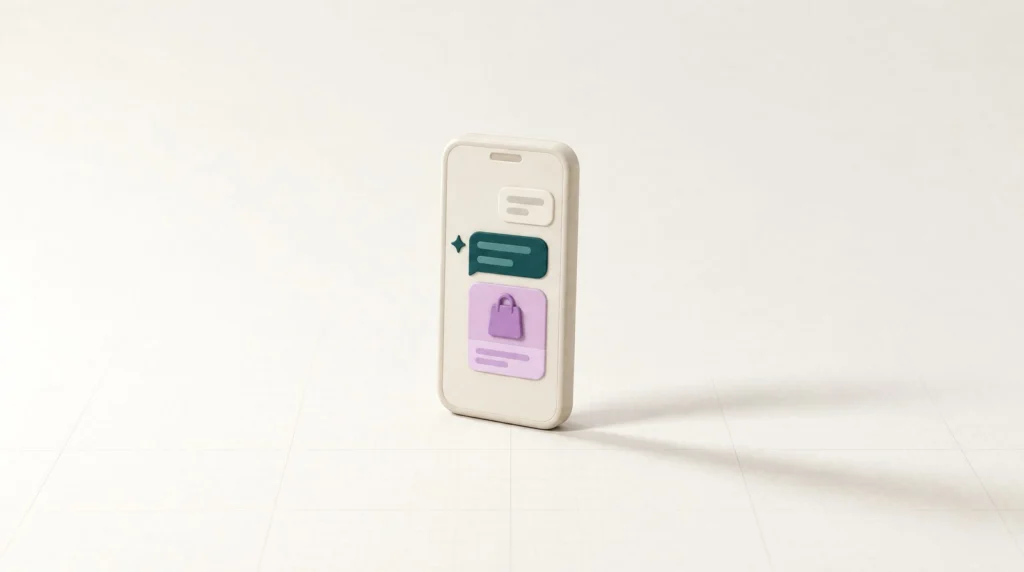
The ad appears below ChatGPT’s answer, labeled “Sponsored,” and is visually separate from it. It started as plain text, and now there are also product cards with images. According to OpenAI’s commitments, ads don’t influence what ChatGPT answers, and users’ conversations aren’t shared with advertisers.
One difference worth keeping in mind: you don’t target keywords like in Google Ads. The platform chooses when your ad appears based on the topic of the conversation.
What changes in Greece because of GDPR?
This is where Europe differs from the US. There, ads can also be based on previous conversations or on ChatGPT’s “memory.” In Greece and the rest of the European Economic Area, ads are selected based only on the current conversation, the language, and the user’s approximate location.
Personalized advertising requires explicit consent (opt-in) from the user and, as of October 2026, had not yet been enabled in Europe. The data protection authorities of Hamburg and Berlin have already raised concerns about OpenAI’s plans, so the rules may change.
What does this mean in practice? That in Greece, advertising on ChatGPT looks more like search advertising than Facebook. The user sees you because they’re asking about something relevant at that moment, not because ChatGPT “knows” who they are.
How much do ChatGPT Ads cost?
OpenAI doesn’t publish a price list. The price is set at auction, and billing depends on the campaign goal: per 1,000 impressions (CPM), per click (CPC), or with optimization for conversions.
To give you a benchmark, in the US:
- At first: The first advertisers paid about $60 per 1,000 impressions, with a minimum commitment that, according to reports, exceeded $200,000.
- Today: Agencies report costs of $25-45 per 1,000 impressions, while OpenAI suggests a starting maximum bid of $3-5 per click.
- Minimum spend: In Ads Manager there’s no minimum commitment, only a minimum daily budget per campaign.
Keep in mind: these are US market figures, and most come from agencies, not from OpenAI. There’s no reliable published data for Greece yet. The only way to find out the cost for your industry is a small, controlled test.
Which businesses benefit the most?
In this first phase, OpenAI is prioritizing consumer industries. ChatGPT Ads are the best fit for:
- E-shops and consumer products: Users often ask ChatGPT for product recommendations and comparisons.
- Tourism and hospitality: Planning a trip is exactly the kind of conversation where the user asks for recommendations.
- Services that require “research” before deciding: Education, renovations, business solutions.
Advertisers in healthcare, legal, and financial services are approved only on a case-by-case basis, after review by OpenAI. In addition, under the platform’s rules, ads don’t appear in conversations about personal health matters. So for a clinic or a medical practice, the room to maneuver is small. There, organic presence in AI answers matters much more, as we explain in our GEO guide.
What to prepare now
Even if you don’t plan to start tomorrow, there are five things worth having ready:
- Measurement: Conversion campaigns need the OpenAI pixel or a connection through the Conversions API. Without proper conversion tracking, you won’t know what the ads are bringing you.
- Your customers’ questions: Since targeting is based on the topic of the conversation, write down what your customers ask before they buy. That is, essentially, your targeting.
- Landing pages that answer: The user arrives from a conversation, with a very specific question. The landing page must answer it immediately and not send them to the homepage.
- A small test with a clear goal: Four to six weeks, a set budget, and a comparison of cost per customer against Google Ads and Meta.
- Your organic presence: The ad appears below the answer. The answer itself can’t be bought; you have to earn it.
Frequently asked questions about ChatGPT Ads
Can a Greek business advertise on ChatGPT?
Yes. Since late August 2026, Ads Manager has also been available in European markets. You can open an account yourself or run your campaigns through an agency.
If I advertise, will ChatGPT recommend me more often in its answers?
No. The ad appears separately and, according to OpenAI, doesn’t affect what ChatGPT recommends. To show up within the answers themselves, you need GEO, meaning optimizing your organic presence for AI.